Get deals & exclusive offers directly in your inbox.
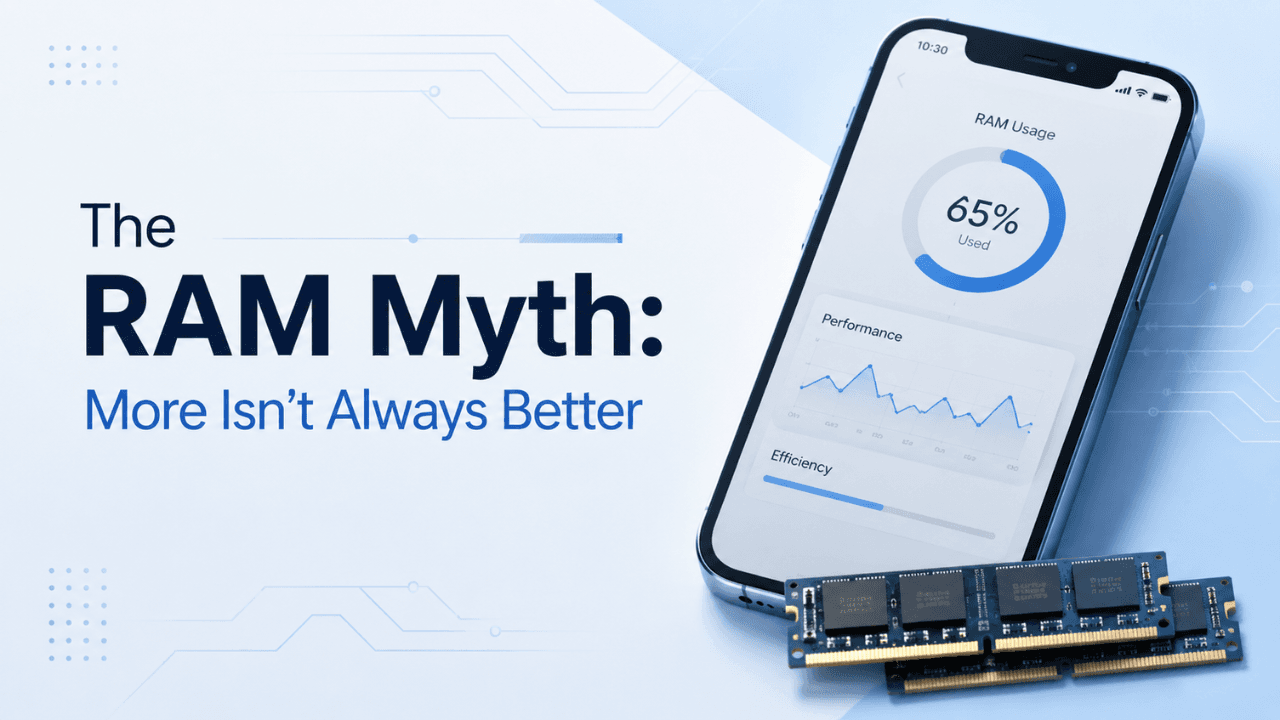
Table of contents
You walk into a phone store, pick up two boxes, and choose the one with more RAM. So did almost everyone else, but here's the uncomfortable truth about RAM: that higher number probably doesn't change how your phone actually performs. Brands know you won't question it, so they plaster big specs on the box and let your assumptions do the selling. Phone memory, camera megapixels, overnight charging, closing background apps — nearly everything most people "know" about their phone is either exaggerated or flat-out wrong. Before your next upgrade costs you money you don’t need to spend, read the blog ahead.
The obsession with smartphone specs
Brands plaster 12GB and 16GB RAM on their boxes; the bigger numbers feel better. So buyers chase them — even when the extra memory changes nothing in daily life. This is how myths survive: marketing fills the space that education leaves empty.
Most users focus on visible specs rather than understanding how phones actually work. So myths about more RAM, cameras, charging, and battery life still affect buying decisions even after years.
What does phone memory actually do?
Think of memory — RAM — as your desk and your storage as the filing cabinet. RAM holds the things you are working on right now. Your phone keeps apps in memory so it can switch between them quickly without reloading from scratch.
More memory helps with multitasking, gaming, and fast app switching. But the benefit has a ceiling, too. Once your phone has enough memory for your actual tasks, adding more stuff gives you almost nothing in return.
"If your device has enough memory for your real habits, adding more is like buying a bigger desk when you only use one corner of it."
More RAM looks good on the box, but it doesn't tell the whole story; the performance really depends on the processor, software optimisation, and storage speed — and when those three are dialled in, a phone with less RAM can easily outrun one with more memory. Apple's iPhones perform with 6GB of storage, less than many budget Android phones, and yet stay fast for years. That's not the hardware working harder; that's the software working smarter.
For most people, the daily reality is scrolling, messaging, streaming, and browsing — tasks that use a small slice of what modern phones already have. Brands know a bigger number sells, so 12GB gets printed large on the box, even when 8GB would handle everything you actually do without breaking a sweat. So does more RAM mean a better phone? Not on its own.
Quick question: If you don't edit 4K video or play AAA mobile games daily, you almost certainly don't need more than 8GB of phone memory, do you?
Other Myths People Still Believe
Myth 01
More megapixels mean a better camera
Sensor size, image processing, and software matter more than pixel count.
Myth 02
Close apps to save battery
> Reopening apps costs more power than leaving them in the background.
Myth 03
Overnight charging kills the battery
> Modern phones stop at 100%. Many let you cap at 80% for long-term health.
Myth 04
Incognito mode = full privacy
It hides history on-device only. Your ISP and websites still see everything.
This table shows how much memory you need according to your work requirements.
|
User type |
Phone Memory |
Why it works |
|
Casual user Social media, Streaming, calls |
6-8GB |
Covers everyday tasks without overspending on specs you'll never use |
|
Heavy user Gaming, editing, multiple apps |
10-12GB |
More RAM keeps demanding tasks running smoothly without slowing down. |
|
Professional Video, 3D, intense multitasking |
12GB+ |
At this level, memory and processor work together – you need both to fire. |
Instead of chasing the biggest device memory number, compare these things first:
Buy the phone that fits your actual habits. A phone matched to real use saves money and skips the upgrade cycle, which also means less electronic waste.
To conclude, phone memory matters, but it does not work alone. A fast processor, optimised software, and efficient storage determine real-world performance. Most people handle their daily tasks comfortably with 6–8GB. Closing background apps wastes battery, megapixels do not equal camera quality, and overnight charging does not damage modern phones. Before your next upgrade, match the specs to your actual habits — not the marketing. A well-matched phone saves money, lasts longer, and performs better than an overpowered one you never fully use.
FAQs
Q1. Do most people actually need 12GB of phone memory?
No, if your day includes social media scrolling, streaming, and calls, 6–8GB handles it all comfortably.
Q2. Will more RAM make my phone better at gaming?
Partly. It helps with smoother multitasking and fewer reloads — but your GPU and processor do the real work.
Q3. iPhones use less RAM than budget Androids — so why are they faster?
Apple coherently builds the hardware and software system, whereas Android does not.
Q4. Does more RAM drain your battery quicker?
No hard-working processor, a bright display, and poorly optimised background apps drain the battery faster.
Q5. Are refurbished phones actually worth it?
Yes, a refurbished device from a trusted seller with a warranty can deliver a solid value of up to 60% and reduce electronic waste