Get deals & exclusive offers directly in your inbox.
Arjun had been using the same phone for three years. The battery was draining faster, the software updates had stopped, and everyone around him was already upgrading. So he decided to upgrade his phone too.
He walked into the store, browsed through the models, and bought a phone, but not the flashiest one. He stood there, scrolled through the specs, and picked one made from recycled materials with a lower carbon footprint within his budget. (A carbon footprint is the amount of greenhouse gas emissions a product creates; the lower, the better for the environment.) Different choices, different thinking. The same evening, his roommate asked him, "Why this phone instead of a regular one?” Arjun said, "I just wanted a phone that doesn't cost the planet." This one sentence said everything.
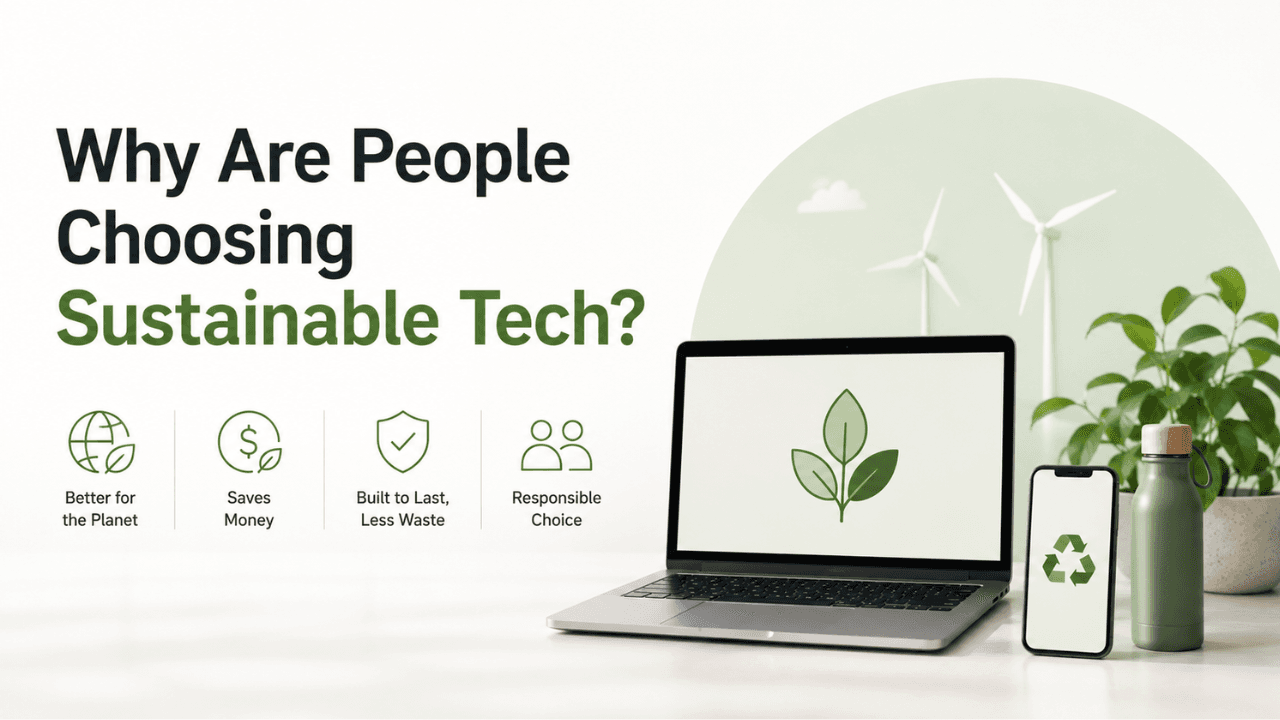
Millions of people are making the same quiet shift. They're not activists, just buyers who've started asking better questions, and sustainable tech is the answer the industry is finally delivering.
Sustainable tech is technology built to minimise harmful environmental impact, meaning every sustainable phone, laptop, or tablet you use is assembled with recycled metals, manufactured using renewable energy, and designed to be repaired rather than replaced, reducing energy consumption and extending product lifespan to create less waste.
Green tech innovation is guiding this transformation, finding smarter, cleaner ways to build the gadgets billions of people use every day while protecting the environment.
Three forces are quietly reshaping how people buy technology — awareness, options, and values. A sustainable device is no longer a compromise; consumers increasingly understand the true cost of their devices – the hidden labour, the impermanence of products, and the landfills. Understanding this has changed people's views on device upgradation.
Green tech innovation made the ethical choice easy with eco-rated phones, carbon-labelled tablets, and laptops built to last longer. Green tech now sits shoulder to shoulder with conventional alternatives, matching them on price and performance.
People aren't switching out of guilt. They're switching because sustainable tech finally fits naturally into their lives – and green tech innovation is making it possible.
A UN report states that over 50 million tonnes of e-waste are generated annually, and less than 20% is properly recycled. Sustainable tech fights back through modular designs, longer software support, and recycled materials. Advanced facilities have cut manufacturing energy use by up to 70%, contributing to environmental improvement.
Every sustainable device sold is one less device ending up in a landfill. One less source of toxic chemicals leaching into soil and water. Green tech isn't just an industry shift — it's a direct investment in a cleaner, healthier planet.
The market has spoken loudly due to changes in customer demand. Phone manufacturers are now competing on repairability. Laptop brands are publishing full carbon footprints. Reports: tablet makers are rolling out trade-in and recycling programmes as standard features.
Consumers made sustainable devices a must-have, making green tech an important current need for every brand. The companies lead this shift to win more customers, earn loyalty, and future-proof their business.
Challenges of selling sustainable tech
Selling sustainable devices comes with some real problems. Here are the five biggest challenges holding the industry back:
|
No. |
Challenge |
What It Means |
|
1 |
High Prices |
Sustainable devices often cost more. This put them out of reach for many customers. |
|
2 |
Greenwashing |
Some brands add “eco” labels without making real changes. This misleads consumers and weakens trust. |
|
3 |
Complex Supply Chains |
It is hard to track every part and process. True transparency is difficult to prove. |
|
4 |
Uneven Access |
Sustainable products are not easy to find in many markets. Most buyers never get the option. |
|
5 |
Consumer Awareness |
Many people still do not know what makes a product truly sustainable. Without clear information, it is a hard choice. |
Conclusion
To conclude, sustainable tech is no longer a small, niche choice; it is a growing movement done by real people who make smarter decisions every day. Some buy phones made from recycled materials; others pick laptops built to be repaired. A growing number of consumers choose tech that fits their values. Brands change too — they publish carbon reports and launch trade-in programmes.
The market faces some challenges at present: greenwashing, uneven access, and high prices hold the movement back, but the direction is clear. Every device bought with the environment in mind is one less device in a landfill — one step closer to a cleaner planet.
Green tech innovation is no longer a promise. It is here now, and every day, buyers like Arjun lead the way.
Q1. Why choose sustainable tech?
It’s safe for the environment and low maintenance.
Q2. Why is sustainable technology important for businesses?
It lowers long-term operational costs by reducing energy consumption and optimising utility expenses.
Q3. How to know the device is sustainable?
Check for the eco label before purchasing the device.
Q4. Does sustainable tech sacrifice performance?
No, they are designed to be highly energy-efficient with maximum performance.
Q5. How to control e-waste?
Sell or trade your old device on various platforms instead of letting it go in the trash.